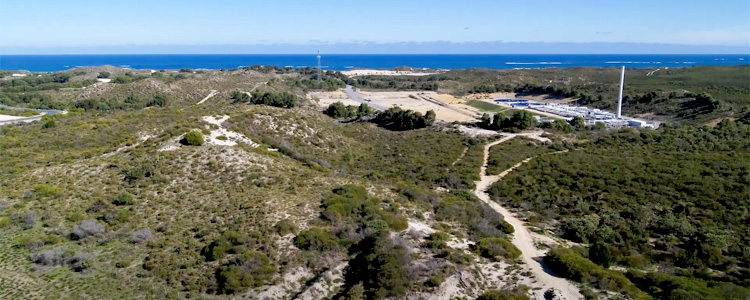
Alkimos
Alkimos is the site for the new desalination plant to meet the needs of our growing city.
Learn about AlkimosAs our climate changes and population increases, so does our access to water. With less rainfall, we can’t rely on traditional water sources such as streamflow and groundwater like we used to. While seawater desalination isn’t the only answer to water scarcity challenges, it will continue to play a key role in securing a climate-resilient water future for Western Australia.
We were the first utility in Australia to introduce desalination as a large-scale, climate-resilient source of drinking water. Our seawater desalination plants in Kwinana and Binningup provide water security for Perth, with the capacity to supply around half of the local water needs. Looking to the future, we're investing in seawater desalination across the state.
Desalination turns seawater into fresh water for drinking, using a process called reverse osmosis.


Our desalination plants are designed to have minimal impact on the environment. We also meet strict environmental standards.
Brine can contain small amounts of chemicals like anti-scalants, coagulants and cleaning agents. We only use chemicals approved by the Department of Health for drinking water treatment. The diffusers mix the brine quickly with the surrounding ocean. Within tens of metres, salinity levels return to natural levels.
We complete 3D brine dispersion modelling using data on local waves, tides and currents. This helps us understand how brine disperses into the ocean after discharge. The modelling guides us in designing diffusers that suit local conditions.
To confirm we are having minimal effects on sensitive marine habitats, we continuously monitor the water entering and leaving our plant and undertake routine monitoring at various locations in the ocean near our diffuser systems. Offshore infrastructure is also regularly inspected to ensure everything is working efficiently.
Environmental monitoring and data collection starts before a site is selected for any seawater desalination plant. This information helps us design and position the infrastructure to minimise environmental impact. It also forms part of the environmental impact assessment and approval application that is sent to the Regulator.
Monitoring of the marine environment includes:
We also complete the following studies:
We’re committed to becoming a net-zero carbon emitter by 2035. Desalination is an energy-intensive process so we’re investing in renewable energy, including farms and solar, to help us achieve this goal.
In seawater desalination plants, brine is the salty byproduct returned to the ocean. It is nearly twice as salty as seawater because about 35-45% of the freshwater is removed, depending on the design of the desalination plant.
Brine may contain very small amounts of food-grade chemicals like anti-scalants and cleaning agents, used in the desalination process. They are used to keep the membranes working efficiently. Only chemicals approved by the Department of Health for use in drinking water are used.
We begin the environmental impact assessment (EIA) and approval process after we complete The potential environmental impacts of desalination proposals are defined, assessed, managed, and monitored under the Environmental Protection Authority’s (EPA’s) Environmental Quality Management Framework (EQMF) for the State’s marine waters. The EQMF is set out in the EPA’s (2016) Technical Guidance: Protecting the Quality of Western Australia’s Marine Environment.
Our planning, investigations and concept design. The process includes referring the proposal to the EPA under Part IV of the Environmental Protection Act 1986. EIA is a step-by-step way to assess how a proposal might impact the environment. A key step in EIA is finding effective controls and management measures. These help reduce possible negative environmental impacts. The referral must show we're using the best measures. It must also show we have genuinely evaluated the location and design options for the proposal. This, along with the proposed environmental management measures, will ensure the EPA’s environmental objectives are met. The public is encouraged to join the EPA process via its consultation hub.
Brine is returned to the ocean through a brine pipeline with a diffuser at the end. Diffusers help rapidly mix and dilute the brine with seawater so that salinity reduces to match the surrounding seawater, generally within tens of metres. Mixing and dilution minimises the impact on marine life and ecosystems.
Brine continues to mix with seawater after it leaves the diffuser. It will not form pools of hypersaline water or collect in depressions or basins.
Whenever we can, we try to avoid sensitive marine habitats, such as seagrass. We prefer to install brine diffusers in areas with bare sand.
The effect on stationary marine life, like seagrass, will be limited to the area where the highly diluted plume touches the seabed. We use brine dispersion modelling and habitat mapping to predict where this will happen. This helps us find areas that reduce impacts and avoid sensitive spots, like seagrass. It also helps us design the brine diffusers specifically for the location where they will be installed, so that we ensure the brine is being effectively dispersed into the surrounding ocean.
Mobile marine life that prefers lower salinity will move away from the brine. However, many species that tolerate high salinity will thrive near the diffuser. Mussels, starfish, seahorses and fish often gather around these structures and grow on them, creating unique ecosystems.
Our diffusers at the Southern and Perth Seawater Desalination Plants show that they create habitats for marine life. Fish, mussels, starfish, seahorses and crayfish all thrive on and near the diffusers.
Our marine monitoring has demonstrated continued compliance with environmental regulations at our existing seawater desalination plants.
We completed a study in Albany to investigate the option of brine recycling, known as zero liquid discharge - for managing brine rather than returning it back to ocean.
The infrastructure required, such as evaporation ponds or advanced treatment technologies, would be extremely costly and energy intensive. For example, evaporation ponds would need hundreds of hectares of land and cost hundreds of millions of dollars, likely requiring clearing or repurposing of agricultural land. Alternative methods like evaporators and crystallisers also have high energy demands and operating costs.
The salt produced is not suitable for food-grade use, and there no known industrial demand in Albany for low-grade salt, meaning it would need to be sent to landfill.
For all these reasons, brine recycling is not a practical, environmentally sound or cost-effective solution. Based on our experience operating desalination plants, we are confident that ocean discharge can be managed in a way that is safe for the environment and acceptable to the community.
Seawater desalination is four times more energy intensive than groundwater collection and over 40 times more energy intensive than water sourced from dams.
We are currently constructing our third desalination plant in Alkimos in Perth’s north and investigating options for desalination in Albany, Exmouth, Geraldton, Port Hedland and Karratha to ensure the reliable and sustainable supply of water to these communities.
Alkimos is the site for the new desalination plant to meet the needs of our growing city.
Learn about Alkimos
We're investigating areas for a future seawater desalination plant near Albany.
Learn about the Great Southern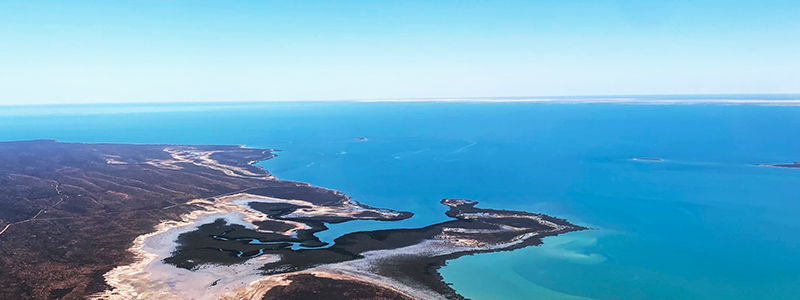

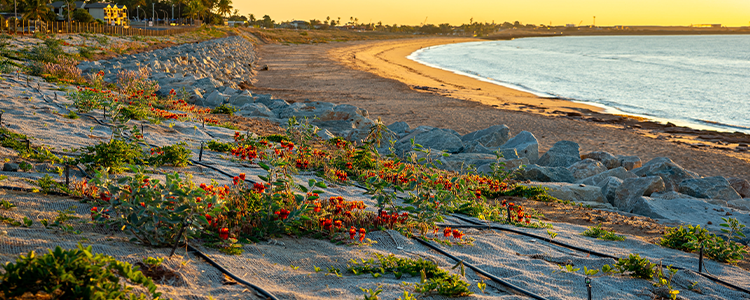
We're planning for a new drinking water source to supply the Port Hedland Water Supply Scheme.
Learn about Port HedlandA United Nations study shows at least 177 countries use desalination as of 2025, with some getting 100 per cent of their drinking water through this process.
"Conventional approaches relying on rainfall and river runoff in water scarce areas are no longer sufficient to meet human demands. Unconventional water resources, such as desalinated water, are expected to play a key role in narrowing the water demand-supply gap." - United Nations