Martin to Wungong water pipeline
Project goal:
We’re planning a new water pipeline between Wungong and Martin to help keep water flowing reliably to homes and businesses across the City of Gosnells and the City of Armadale. This work supports long‑term water security for the growing south‑east corridor.
Status:
Planning.
Delivery Date:
Construction is expected to begin in early to mid 2027 and take about 24 months to complete.
What's happening?
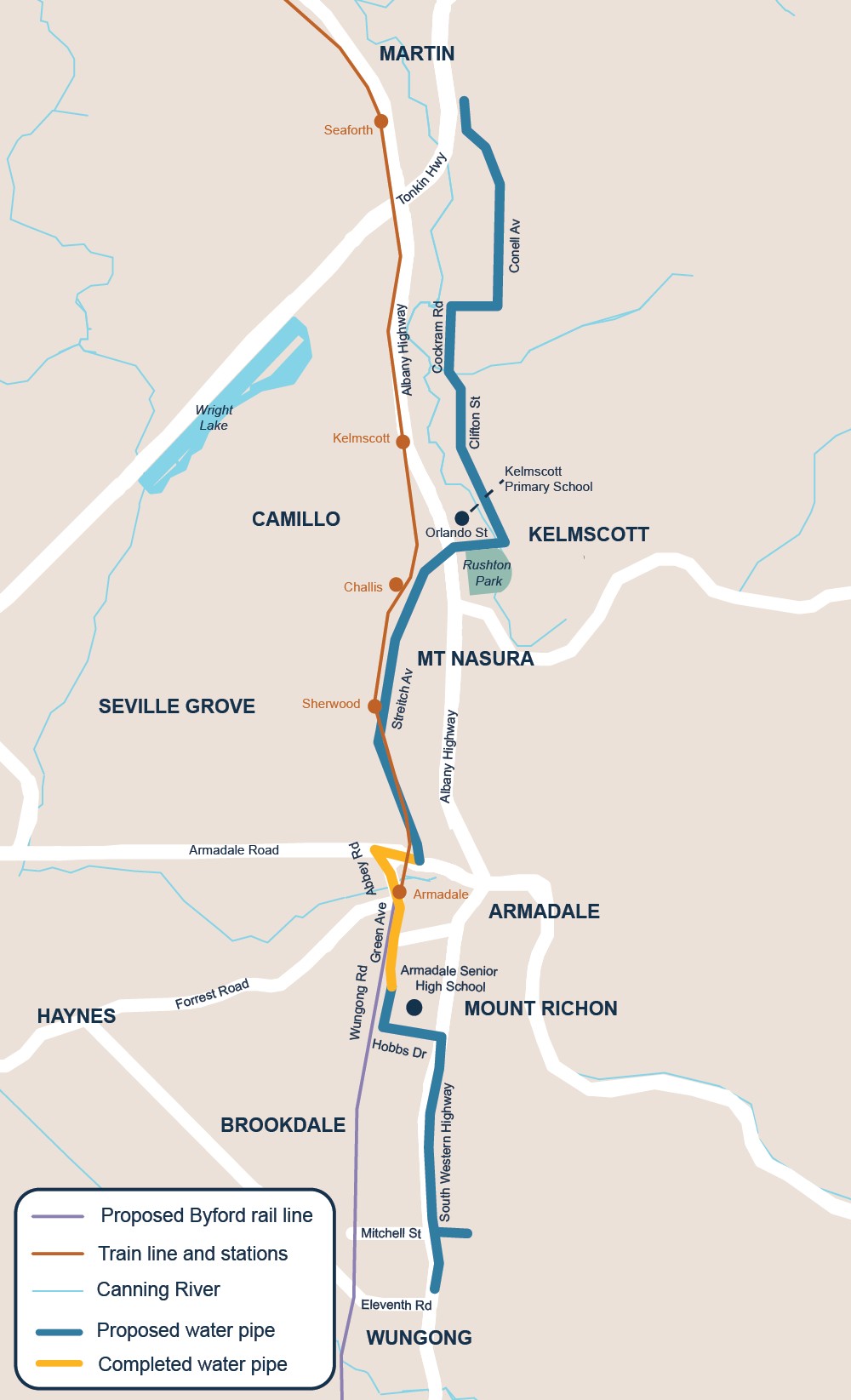
We’re planning a 12 km underground water pipeline that will follow local roads. This pipeline will support future drinking water supplies by helping move and store water between Canning Dam and Wungong Dam.
This work is part of a broader program to make the Perth water network stronger and able to handle future demand.
Throughout 2026 and into 2027 we will be conducting walk throughs and non-invasive investigations along the pipeline route. You may notice an increase in personnel and vehicles in the area during this period.
Why is this happening?
The new pipeline will help move large volumes of water between Canning Dam in Ashendon and Wungong Dam in Bedfordale. This will support water security across the south‑east metro area and provide important backup for the Belmont and Nicholson pump stations.
It will also:
- strengthen the local water supply
- help the network during high demand periods
- support future desalinated water entering the system
When is this happening?
Planning and investigations will continue throughout 2026 and into 2027.
Construction is expected to begin in early to mid 2027 and take 24 months to complete. Work will be completed in stages to reduce disruption to the community.
Where is this happening?
The proposed pipeline route currently includes: Connell Avenue, Pries Park Road, Cockram Road, Clifton Street, Orlando Street, Ottoway Street, Streich Avenue, Armadale Road, Abbey Road, Green Avenue, Wungong Road, Hobbs Drive and South Western Highway. We’re currently finalising the route with the City of Armadale and Gosnells as environmental and heritage checks continue.
How will this impact me?
Most construction will use open‑trench methods. In some areas, we’ll use tunnelling under major roads such as Albany Highway, River Drive and South Western Highway to reduce impacts.
When work is underway, you may notice:
- more activity in the street
- temporary noise and dust, both of which will be monitored and controlled using suppression measures
- traffic changes or short detours
Traffic management will be in place to help people move safely around work areas.
Some work may be needed in residential verges. If this affects your property, we’ll contact you ahead of time to explain what to expect.
Protecting the environment
We know trees and natural areas are important to the community. To reduce environmental impacts, we will:- work with arborists and local governments
- avoid removing trees wherever possible
- use construction methods that protect tree roots and minimise any impacts
- provide offsets where tree removal can’t be avoided
We've recently completed site investigations along the proposed Martin to Wungong water pipeline route.
We're now reviewing the results and working to confirm the preferred pipeline alignment. This work will help us identify the best route for the pipeline while minimising impacts on the community, existing services, trees and the environment.
What's next?
Over the coming months, we will:
- Continue planning and design work for the preferred pipeline alignment.
- Progress approvals.
- Engage directly with landowners, residents and businesses located along the preferred route.
We're also sending an early project notification to residents and businesses across the wider project area to keep the community informed as planning progresses. We are continuing to investigate the best alignment for the proposed pipeline and are working to minimise impacts to the community and the environment wherever possible.
We'll continue to update this page as more information becomes available.
If you have any questions, please contact the project team at martintowungong@watercorporation.com.au
Throughout 2026 and into 2027 we will be conducting walk throughs and non-invasive investigations along the pipeline routes and surrounding areas. This work will help us plan for construction. You may notice an increase in personnel and vehicles during this period.
Thank you for your patience and understanding while this important planning work takes place.
If you have any questions, please contact the project team at martintowungong@watercorporation.com.au
From Monday 20 July to Monday 31 August 2026, we will be carrying out tree surveys at locations along the proposed Martin to Wungong water pipeline alignment.
These surveys will help us better understand existing vegetation and identify opportunities to avoid or minimise impacts to trees as we continue refining the pipeline route.
What to expect:
- Work will take place between 8am and 5pm, Monday to Friday.
- Survey teams will primarily work within road reserves and public open land.
- No tree removal, pruning or ground disturbance is planned as part of these surveys.
- You may notice survey vehicles and personnel working in the area.
- Temporary traffic management may be required at some locations to help keep road users and workers safe.
We are continuing to investigate the best alignment for the proposed pipeline and are working to minimise impacts to the community and the environment wherever possible.
Thank you for your patience and understanding while this important planning work takes place.
If you have any questions, please contact the project team at martintowungong@watercorporation.com.au
Lina Peche - Community Engagement Advisor