Meet Kep - canine leak detection specialist
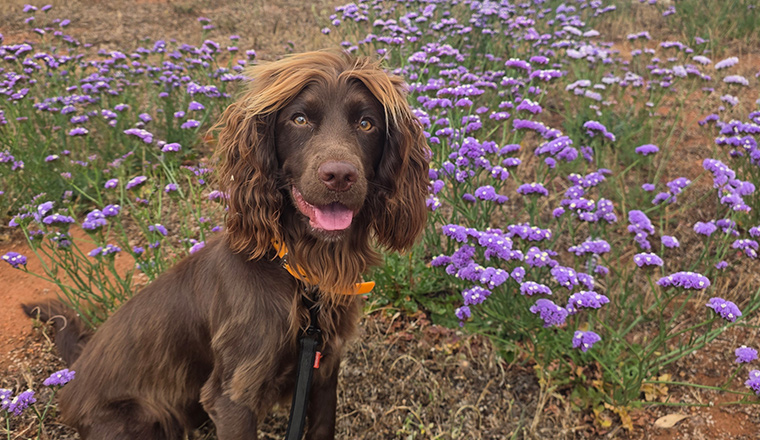
Meet Kep, Australia's first leak detection dog, and Piper, the next four-legged recruit helping us find hidden leaks and protect WA's valuable water supply.
Kep was trained to help us find underground leaks using her hearing and sniffing abilities, allowing us to reach areas otherwise inaccessible to other leak detection methods.
After many years of dedicated service, Kep is now enjoying her well-earned retirement, with Piper joining the team to carry on this important work.

As a puppy, Kep underwent 12 weeks of intensive training with a specialist dog trainer in New South Wales before she made the journey to Perth, where she’s been working in the field with us in October 2018.
An English Springer Spaniel, Kep is the daughter of Tommy – an experienced detection dog who took part in our initial trial in June 2017. English Springer Spaniels are often used as sniffer dogs due to their amazing sense of smell, willingness to work hard and ability to cover rough terrain, and our Kep was a testament to this.
Meet Piper
Piper is our newest leak detection dog, joining the team to help us continue finding hidden leaks across WA.
A female Cocker Spaniel, Piper will join the frontline, helping monitor our regional water pipelines across the Goldfields and Agricultural region.
With the ability to search an area of around 500 metres to one kilometre at a time, inspecting up to four to five kilometres of pipeline a day, Piper will help us cover large stretches of network in the search for hidden leaks.
While she still has plenty to learn, Piper represents the next chapter in our canine leak detection program, continuing Kep’s legacy.
Why use dogs to detect leaks?
Leak detection dogs are extremely effective and valuable teammates who can cover large areas far quicker than humans, focus for longer and operate with acute senses that equipment can’t compete with.
Kep was recruited to help us detect leaks on underground water mains where regular detection methods are either less effective or cost prohibitive. Her work focused largely on regional WA, where long stretches of buried water mains can present unique challenges.
Kep was one part of our wider leak detection program, which has been around since 2010 and targets hidden leaks on water mains in both suburban and rural areas. The program is an important, proactive step we take to save our valuable water supplies, as we face the impacts of climate change and declining rainfall.
The lowdown on leaks
Leaks are a reality faced by water utilities around the world and we’re tasked with managing nearly 35,000km of water mains across an area of more than 2.6 million kilometres, making us the largest water utility in the world in terms of the geographical area serviced. We mostly do this through innovative detection methods and proactive maintenance.
The significance of "Kep"
When she was first recruited, we sought the help of West Australians to help us choose a name for our new teammate and (spoiler alert) Kep was the winner! Kep is the Noongar word for ‘water’, a fitting name knowing the significance of water in Aboriginal culture, and Kep’s role in protecting this precious resource.
Learn more about the significance of water in Noongar culture.

Keeping our canine team safe
The health and wellbeing of our leak detection dogs is always our first priority. Our dogs work alongside qualified handlers who are trained in animal ethics and care, ensuring they have access to water, nourishment and regular rest breaks.
Before our dogs start work at a new site, their handler Louise performs an inspection and assessment of the area that the dog will be scanning (or sniffing!) to determine if there are any risks or harmful vegetation in that area. If the area presents an issue, the dog won't work until it's safe to do so, or we'll utilise alternative leak detection methods instead. In between every working run, the dog is thoroughly checked over between to ensure they’re fully fit.
Our dogs have also been trained to keep at least 5m away from snakes and can sense them coming much sooner than a human.
Paw-some work!
Interestingly, a dog’s paws (and more specifically paw pads) help with stability, so it's in Piper's best interests to be barefoot to prevent unnecessary harm that shoes may cause when she's leaping and bounding on the hunt for the scent.
More than a 9-5 job
Caring for a leak detection dog doesn’t stop when the workday ends. Our dogs are part of their handlers’ families too, and need plenty of time for play, training, rest and regular health check-ups.
The combination of care, training and teamwork is what helps our canine colleagues do what they do best – help us find hidden leaks and protect WA’s valuable water.
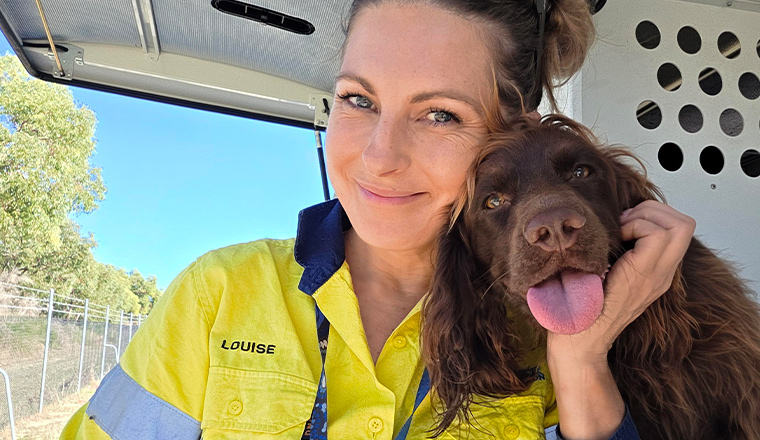
Louise with Kep